
The recent controversy surrounding comedian Park Na‑rae has sent shockwaves across Korea’s entertainment and medical communities. On December 8, the Korean Medical Association (KMA) issued a formal statement confirming that the woman known as Park’s “injection aunt” is not a licensed doctor in South Korea.
What started as rumors of home-based IV drips and vitamin injections has spiraled into allegations of unlicensed medical practice, with potentially serious legal consequences.
What Exactly Happened?
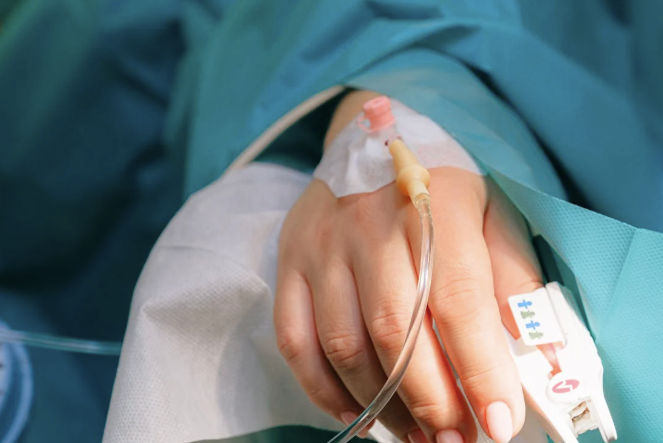
Rumors first surfaced when photos emerged showing Park receiving intravenous drips and similar treatments from a woman identified only as “A” in private settings, not in a hospital or clinic. The woman reportedly visited Park at her home or in a vehicle, administering injections that she described as “nutrient drips.”
Park’s agency initially defended the arrangement. They claimed that Park believed the woman was a legitimate doctor and that the injections were merely nutritional supplements administered during house calls because of her busy schedule.
However, as scrutiny intensified, medical professionals began questioning the woman’s credentials, and soon enough, legal issues followed.
What the Korean Medical Association Found
After checking its internal records, which contain the names of all licensed domestic physicians, the Korean Medical Association confirmed that the woman in question is not registered as a doctor.
According to the KMA, even if she had studied medicine abroad, that does not automatically grant her the right to practice in Korea. The law requires professionals to obtain a local license.
Under the country’s medical law, performing medical treatments without a license is a criminal offense. The unlicensed act can carry up to five years in prison or a fine of up to 50 million won (roughly 34,000 USD).
Given these findings, the KMA has formally requested the Ministry of Health and Welfare and the Ministry of Food and Drug Safety to launch a full investigation. They also called for scrutiny into possible illegal distribution of psychotropic or prescription drugs connected to the case, since there are reports that controlled substances may have been involved.
The Suspect’s Response: Claims and Doubts
On December 7, the woman publicly defended herself in a social media post. She claimed that about 12 to 13 years ago, she studied medicine in Inner Mongolia. She added she had become the “youngest professor” at what she referred to as “Fokang Medical University Hospital.” She said she had worked to build a Korean plastic surgery center and had participated in medical conferences and interviews abroad.
But her background was quickly challenged. A group of Korean medical students and young doctors, calling themselves Doctors for a Fair Society, reviewed global medical school directories and found no record of the institution she claimed to attend. They labeled it a “ghost medical school.”
Moreover, even if she had graduated from a legitimate foreign medical school, Korean regulations require a local medical license to practice in the country. Without it, any treatment she administered in Korea would be illegal by default. Her social media posts have since been deleted, and she has offered no further clarifications.
What Could Happen Next
Given the findings by the KMA, the woman who administered injections could face serious charges. Unlicensed medical practice alone can lead to up to five years in prison or a significant fine.
But that might not be the end of it. The complaint filed by former KMA president Lim Hyun-taek also cites potential violations of the Pharmaceutical Affairs Act and the Act on the Prevention of Health Crimes, as well as possible fraud.
Authorities are also investigating how controlled medications, possibly including psychotropic drugs and antidepressants, may have been obtained or distributed illegally. If found, those involved in supply, prescriptions, or facilitation could face additional legal action.
There is even a possibility that clients who knowingly received these unlicensed services might be considered accomplices. According to government guidelines, patients who “actively request” illegal medical services despite knowing they are unlawful could also be subject to punishment.
As investigations continue, this case may reshape public perceptions of wellness services and reinforce the importance of certified medical professionals. For now, Park Na-rae has paused her activities, and all eyes are on how the legal process unfolds.
Check out Saranghero for the latest K-pop and K-drama news and updates.