
The Korean beauty industry is known for innovation, but what truly sets it apart is speed. Trends don’t just emerge. They evolve, peak, and disappear within months. If you’ve ever wondered why yesterday’s “glass skin” suddenly becomes today’s “skip-care,” you’re not alone.
The Korean beauty trend cycle moves faster than most global beauty markets, driven by culture, technology, and consumer behavior.
Understanding this cycle isn’t just helpful for beauty enthusiasts. It reveals how Korea shapes global skincare standards.
How The Korean Beauty Trend Cycle Actually Works
The Korean beauty trend cycle is not random. It follows a pattern that repeats itself, but at a much faster pace compared to Western beauty markets. Instead of trends lasting years, many Korean beauty trends rise and fall within a single season.
At its core, the cycle typically looks like this:
- Emergence: A new idea or product concept appears, often from influencers or small brands
- Acceleration: Social media and communities amplify the trend rapidly
- Peak Adoption: Major brands adopt and commercialize the trend
- Saturation: The market becomes flooded with similar products
- Decline: Consumers move on, looking for something new
What makes this cycle unique is its compression. In Korea, this entire process can happen in less than a year.
A highly connected consumer base influences this speed. Korean beauty consumers are not passive buyers. They actively test, review, and critique products. That feedback loop dramatically shortens the lifecycle of trends.
For example, a skincare ingredient might trend for a few months before consumers collectively decide it’s overhyped. The industry reacts quickly, shifting focus almost immediately.
The Real Drivers Behind The Korean Beauty Trend Cycle
To understand why the Korean beauty trend cycle moves so fast, you need to look beyond products and into the ecosystem that supports it. Several forces work together to keep the cycle in constant motion.
1. Hyper-Connected Digital Culture
South Korea has one of the most digitally connected populations in the world. Platforms like YouTube, blogs, and community forums allow trends to spread instantly.
Consumers don’t wait for traditional advertising. Instead, they rely on:
- Real-time reviews
- Before-and-after content
- Peer recommendations
- Influencer experiments
This creates an environment where trends are tested and validated almost instantly.
2. Consumer Sophistication
Korean consumers are highly educated about skincare. They understand ingredients, formulations, and routines more deeply level than average global consumers.
Because of this, they:
- Quickly identify ineffective products
- Demand innovation rather than repetition
- Lose interest in trends that feel recycled
This constant demand for something “new” fuels the rapid turnover of trends.
3. Competitive Brand Landscape
The Korean beauty market is extremely competitive. Thousands of brands compete for attention, from indie startups to established giants. To stand out, brands must:
- Launch products quickly
- Experiment with new ingredients
- Respond to micro-trends
This competition accelerates the Korean beauty trend cycle, as brands continually introduce new ideas to the market.
4. Fast Product Development Cycles
Unlike many Western companies, Korean beauty brands can develop and launch products in just a few months. This speed allows them to:
- Capitalize on trends immediately
- Iterate based on consumer feedback
- Replace underperforming products quickly
The result is a market that never stays still.
Why Trends In Korea Fade Faster Than Global Beauty Trends
One of the most noticeable aspects of the Korean beauty trend cycle is how quickly trends disappear. What’s popular today might feel outdated in just a few months.
This happens for several reasons.
First, overexposure plays a major role. Once a trend becomes widely adopted, it loses its novelty. Korean consumers tend to move on quickly when something becomes too mainstream.
Second, the culture values improvement over repetition. Instead of sticking to one approach, there is always a push to refine or replace it.
For example:
- A 10-step skincare routine evolves into “skip-care.”
- Heavy layering shifts into minimalist routines
- Trendy ingredients get replaced by more effective alternatives
Third, social validation cycles are shorter. Trends often rely on visibility, and once they stop generating excitement online, they naturally decline.
This constant shift keeps the industry fresh but also unpredictable.
The Role Of Influencers In The Korean Beauty Trend Cycle
Influencers play a central role in shaping the Korean beauty trend cycle. Still, their influence is different from what you might see in Western markets. Instead of just promoting products, domestic beauty influencers often act as:
- Early testers
- Critics
- Educators
They break down ingredients, demonstrate application techniques, and provide honest reviews. This transparency builds trust, which makes their opinions highly impactful.
How Social Media Accelerates The Korean Beauty Trend Cycle
Social media plays a central role in shaping the speed of the Korean beauty trends. In South Korea, platforms are not just marketing channels. They function as real-time testing environments where products are evaluated almost instantly by users.
Unlike traditional advertising, trends spread through user-generated content such as reviews, tutorials, and before-and-after results. This creates a fast feedback loop where consumer reactions directly influence whether a product gains traction or fades quickly.
Short-form video platforms, in particular, accelerate this process by making trends highly visible within a short period.
Algorithm-driven exposure further intensifies this cycle. Content that performs well is rapidly pushed to wider audiences, allowing trends to go viral within days rather than months. As a result, consumer engagement becomes the main driver of trend longevity.
The Impact Of Innovation On Trend Speed
Innovation is a key factor behind the rapid pace of the Korean beauty trend cycle. Korean beauty brands consistently introduce new formulations, textures, and product formats, often setting new industry standards.
Developments such as cushion compacts, fermented ingredients, and multi-step skincare routines have not only created trends but also reshaped consumer expectations globally.
However, this constant innovation also shortens the lifespan of each trend. Once a new concept proves more effective or convenient, it quickly replaces existing ones.
This continuous introduction of improved products keeps the market in constant evolution. Consumers expect visible results and are quick to shift to newer solutions, reinforcing the market’s rapid turnover.
Ingredient Culture Makes Trends More Specific And More Temporary
Beauty trends in Korea also move fast because they are often built around ingredients or functions rather than just aesthetics. That gives trends a sharper hook, but it can also make them more temporary.
When a market becomes very good at talking about ingredients, every new ingredient can become the center of a mini-cycle.
This is one reason K-beauty trends often feel more granular than trends in other countries. Instead of broad ideas like “dewy makeup” or “natural skin,” Korean beauty conversations often zoom in on things like:
- Barrier support
- Calming care
- Firming overnight masks
- Bio-regenerative actives
- Texture-smoothing finishes
- Scalp-first hair care
- Clinic-inspired skincare steps
Why Korean Consumers Are Quick To Compare, Review, And Switch
Another reason the Korean beauty trend cycle changes fast is that Korean consumers are highly active reviewers. The market is not driven only by branding. It is also driven by comparison behavior.
Platforms like Hwahae highlight how central review culture has become. The company describes itself as a K-beauty data platform powered by more than 10 million real reviews, and its rankings are built around large-scale user feedback and ingredient analysis.
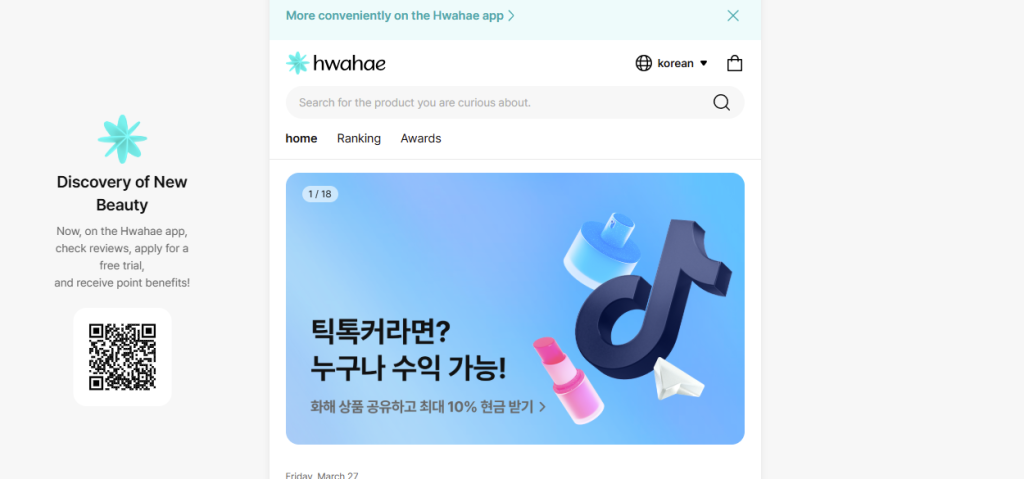
That kind of review environment changes consumer behavior. Instead of choosing a product and staying loyal for long periods, many shoppers constantly assess whether another item has a better ingredient mix, gentler formula, stronger effect, or better price-to-performance ratio. In that environment, brand loyalty is always under pressure.
It does not mean that Korean consumers are shallow or obsessed with the new. It means they are used to having a lot of information.
When review platforms, retailer rankings, creator content, and ingredient breakdowns are all available at once, people become more confident about switching. They can move from one trend to another without feeling like they are buying mindlessly.
The Retail System In Korea Helps Trends Rise And Fall Faster
Retail also plays a major role. In Korea, large health and beauty retailers do more than sell products. They act as trend filters.
A retailer like Olive Young has enough visibility into shopper behavior to identify what is gaining traction and what broader lifestyle themes are shaping beauty demand.
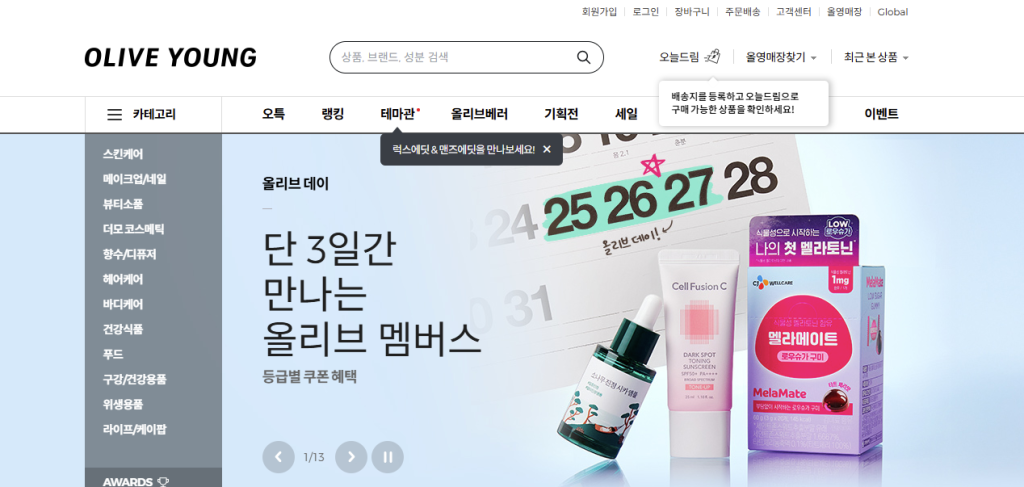
Reporting on Olive Young’s 2026 trend outlook shows the company framing beauty around broader themes such as wellness, suggesting that K-beauty trends are often tied to shifts in how consumers want to feel rather than how they want to look.
That is important because the Korean beauty market rarely settles on a single, narrow look forever. A trend might begin with appearance, but it often gets absorbed into a larger consumer mood.
For example, if shoppers start caring more about irritation, comfort, scalp health, or whole-body wellness, beauty trends tend to move in that direction too. What looks like a quick style change from the outside may actually be a response to a broader change in consumer priorities
Retail visibility speeds this up because stores can surface what is rising right now. Once a trend appears in curated sections, rankings, or campaign pushes, it reaches more shoppers quickly.
Why Global Demand Also Makes Korean Beauty Trends Move Faster
The speed of K-beauty is no longer driven only by domestic demand. Global demand now matters too. According to Korea.net, Korea ranked third worldwide in cosmetics exports in 2024, and by 2025, exports had climbed again to a new record.
Recent reports also note that the United States has become a leading export destination, underscoring how global beauty demand is reshaping the market.
When a beauty market becomes globally influential, trend turnover can speed up for two reasons.
First, brands are no longer speaking to one audience. They are trying to satisfy domestic consumers, cross-border retailers, creators, and international shoppers at once. Second, once global audiences start watching Korea for what is next, brands have an incentive to keep producing “next” faster.
If you are trying to understand Korean beauty culture beyond surface-level trends, learning the language helps you read product claims more critically. Platforms like Saranghero can help you learn at your own pace.
Wrapping Up: The Real Reason Korean Beauty Trends Change So Fast
In the end, the answer is bigger than “Koreans love trends.” The Korean beauty trend cycle changes so fast because it sits at the intersection of competition, manufacturing speed, digital culture, retail visibility, ingredient literacy, and global demand.
Korean consumers are accustomed to closely comparing products. Retailers and review platforms quickly make shifts visible. Social media compresses attention spans. Brands can respond rapidly. Global shoppers add even more pressure.
That does not make K-beauty superficial. In many ways, it makes it highly responsive. Trends move fast because the market is constantly testing what feels better, works better, looks better, and fits the moment better.